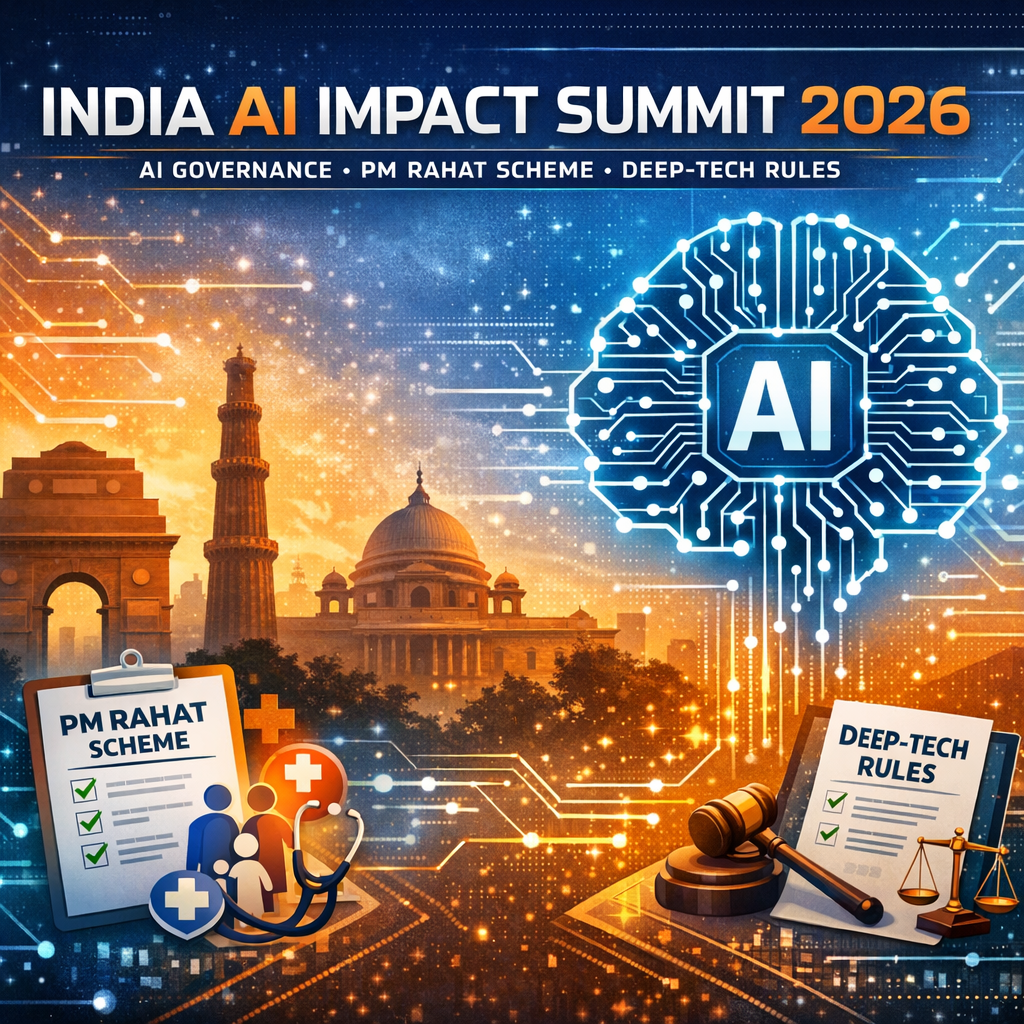
India AI Impact Summit 2026 (New Delhi) mein focus ab practical AI use-cases, PM RAHAT Scheme aur Deep-Tech Governance par shift ho raha hai.
2023–2025 ka phase largely “Generative AI hype” ka raha—tools, demos, prompts, aur shiny chatbots. 2026 mein narrative clearly mature ho chuka hai: AI ka real value tab aata hai jab woh ground-level problems solve kare, aur jab uske around trust + safety + compliance ka framework ho.
India AI Impact Summit 2026 (New Delhi) isi shift ko reflect karta hai—AI ko “cool tech” se “national capability” banane ka push. Two themes jo sabse zyada attention le rahe hain:
- PM RAHAT Scheme (AI adoption/impact ko accelerate karne ka ek structured push—name officially circulate ho raha hai)
- Deep‑Tech Governance (AI + frontier tech ke liye rules, accountability, audits, and safety)
Aage hum dono ko simple language mein decode karte hain—practical use‑cases, stakeholders par impact, aur earning opportunities ke angle se.
1) PM RAHAT Scheme: “AI Impact ko scale” karne ka possible blueprint
Public discussions mein “PM RAHAT Scheme” ko ek aise initiative ke roop mein dekha ja raha hai jo AI ko labs se nikaal kar districts, MSMEs, hospitals, classrooms, aur citizen services tak le jaaye.
PM RAHAT Scheme ka probable intent (simple terms)
- AI adoption ko fast-track karna (especially public good + industry productivity)
- Skilling/reskilling (students, govt workforce, MSMEs)
- India-first AI solutions (vernacular, low-cost, real constraints ke saath)
- Responsible deployment (safety, privacy, bias controls)
PM RAHAT Scheme ke under aap kya components expect kar sakte ho?
(Official details vary ho sakte hain; ye “likely pillars” ka practical view hai.)
A) AI Skilling at Scale (Job-ready focus)
- Prompting se aage: data literacy, evaluation, AI ops, model risk, compliance
- Government + industry mapped curricula
- Regional language learning tracks
B) AI for MSMEs (Productivity missions)
- MSMEs ko tool access + onboarding
- Domain templates: accounting, customer support, procurement, demand forecasting
- “AI adoption playbooks” (what to automate, what not to)
C) Public Sector Use‑Case Acceleration (Citizen impact)
- Departments ke liye reference architectures
- Pilot-to-production pipeline
- Outcome-based KPIs (time saved, fraud reduced, health outcomes improved)
D) Compute/Data enablement (Practical bottleneck solve)
- Affordable compute access for startups/research
- Secure datasets + consent-based data-sharing models
- Sandboxes for testing
E) Responsible AI & Safety guardrails
- Audits, documentation, monitoring
- Bias testing + grievance mechanisms
- Clear accountability for failures
PM RAHAT Scheme ke “real-world” use‑cases (jo India mein immediately scale ho sakte hain)
1) Multilingual Citizen Services (24×7)
- Govt portals/chat assistants: Hindi + regional languages
- “Form filling help”, grievance routing, scheme eligibility guidance
Impact: queues kam, response time fast, inclusion better.
2) Healthcare Triage + Documentation Assist
- Doctor time saving via clinical note drafting (human verification mandatory)
- Radiology/pathology assist for prioritization (not replacement)
Impact: hospitals mein speed + consistency.
3) Agriculture Advisory (Local + Weather + Market)
- Crop advisory in local language
- Pest/disease early warnings (image + data)
Impact: yield protection, better decisions.
4) Fraud Detection in Public Finance / Benefits
- Anomaly detection for leakages
- Duplicate/ghost beneficiary flags (privacy-safe design essential)
Impact: wastage reduction, targeted delivery.
5) Education: Teacher Assist + Personalized Practice
- Lesson planning, worksheets, doubt support
- Student practice paths (without over-surveillance)
Impact: teacher productivity, learning outcomes.
2) Deep‑Tech Governance: AI ka “Rulebook” kyun zaroori ho gaya?
AI ab sirf chatbots nahi—yeh decision-making, identity, health, finance, critical infra ko touch karta hai. Without governance, do cheezein hoti hain:
- Trust break hota hai (hallucinations, bias, privacy leaks)
- Adoption slow hoti hai (enterprises + government risk se darrte hain)
Deep‑Tech Governance ka seedha matlab
Aisa framework jahan:
- High-risk AI par stricter rules
- Low-risk AI ko innovate karne ki freedom
- Accountability clear: “jab system galat ho, zimmedar kaun?”
Deep‑Tech Governance mein kaunse topics center stage par hote hain?
A) Risk-based regulation (One-size-fits-all nahi)
- Healthcare, finance, policing jaise areas: higher scrutiny
- Marketing/content tools: relatively lighter compliance
B) Model transparency & documentation
- Model cards / datasheets
- “What it can do / what it can’t” clearly defined
- Data provenance & licensing clarity
C) AI audits, red‑teaming & safety testing
- Bias tests, security tests (prompt injection, data exfiltration)
- Continuous monitoring post-deployment
- Incident reporting mechanisms
D) Data protection + consent-first systems
- Personal data boundaries
- Retention policies
- Sensitive data access controls
E) IP / Copyright / Attribution clarity
- Training data legality
- Output ownership policies
- Enterprise adoption ke liye crucial
F) Compute governance (frontier models)
- Advanced models ka controlled access
- Safety research alignment
- Export controls / critical tech protections (policy-dependent)
India ke startups, creators, aur professionals ke liye “earning opportunities” (Summit themes se aligned)
Agar aap tech niche mein “High Authority + Earning” target kar rahe ho, to sirf tools review se aage jaakar implementation + compliance + domain solutions pe content aur services build karo.
1) AI Implementation Services (SMBs/MSMEs)
- Customer support automation
- CRM + WhatsApp AI workflows
- Invoice/ledger automation
Monetize: setup fees + monthly retainers
2) Responsible AI Consultant / Auditor (High-demand)
- AI policy drafting for companies
- Vendor risk assessment
- Model evaluation checklists
Monetize: audits + advisory retainers
3) Domain Micro‑SaaS (India-first)
- Hindi/regional workflow copilots
- Legal drafting assistants (with citations + review)
- Clinic documentation assistant
Monetize: subscriptions
4) Training Products (Job-ready, not hype)
- “AI Ops for Business”, “LLM Evaluation”, “Prompt Injection Defense”
Monetize: cohort courses + workshops + corporate training
5) Content Authority (SEO + newsletter + lead gen)
- Summit-driven explainers
- Policy updates + impact breakdown
- Use-case playbooks
Monetize: sponsorships, affiliates (AI tools), consulting leads
Practical Checklist: Aap abhi kya karein (Students, Founders, Marketers, Tech teams)
Agar aap student/professional ho:
- LLM evaluation basics seekho (accuracy, hallucination checks, test sets)
- Data privacy fundamentals (PII, consent, retention)
- 1–2 domain projects banao: healthcare/education/MSME automation
Agar aap founder/agency ho:
- “AI pilot → production” playbook banao
- Contracts mein: data use, retention, liability clauses add karo
- One niche pick karo: clinics, schools, retail, logistics, legal
Agar aap content creator/blogger ho:
- “What changed?” + “What to do next?” style posts likho
- Case studies + templates publish karo
- हर post ke end mein lead magnet: checklist / SOP / toolkit PDF
FAQs (SEO Friendly)
Q1. India AI Impact Summit 2026 ka main focus kya hai?
AI ko practical impact ke saath scale karna (public services + industry productivity) aur responsible deployment ke liye governance frameworks banana.
Q2. PM RAHAT Scheme kis cheez ke around ho sakti hai?
Public discussions ke basis par yeh AI adoption, skilling, MSME enablement, public sector pilots, aur responsible AI guardrails ko accelerate karne ke around ho sakti hai. Final details official releases se confirm karein.
Q3. Deep‑Tech Governance ka benefit kya hai?
Trust, safety, compliance clarity milti hai—jisse enterprises aur government AI ko faster adopt kar pate hain without major risk.
Q4. Bloggers/marketers is trend se paisa kaise kama sakte hain?
Implementation-focused content, niche case studies, training products, AI audits/consulting, aur micro‑SaaS offerings ke through.
Conclusion: 2026 ka winner “tool user” nahi, “impact builder” hoga
India AI Impact Summit 2026 ka big signal yeh hai: AI ka next phase execution ka hai—real problems, measurable KPIs, and governance-backed trust.
Agar aap tech niche mein authority + earnings chahte ho, to apna positioning shift karo:
- “Generative AI news” se aage
- Use-case + implementation + compliance par
Bonus: Suggested On‑Page SEO Elements
Suggested Images + Alt Text:
- Alt: “India AI Impact Summit 2026 New Delhi deep-tech governance and AI policy”
- Alt: “PM RAHAT Scheme explained practical AI use cases for India”
- Alt: “Responsible AI framework audits transparency risk-based regulation”
Internal Links (aapke blog ke liye ideas):
- “LLM Evaluation Checklist (Free Template)”
- “MSME ke liye AI Automation: 10 Workflows”
- “Responsible AI: Bias, Privacy, Security Basics”
External Link Suggestions (verify & add):
- Official government press release pages
- Summit official website/agenda page
- India data protection/regulatory references